What is Regenerative Chicken Farming?
Regenerative chicken farming is an innovative agricultural practice that focuses on improving soil health, nutrient density, and biodiversity through sustainable methods. This approach goes beyond traditional farming by integrating chickens into the ecosystem to enhance overall farm health and productivity.
The Core Principles of Regenerative Chicken Farming
Regenerative chicken farming centers on using natural processes to enhance farm ecosystems. This method emphasizes:
Soil Health Improvement: Chickens contribute to soil health by naturally tilling and fertilizing the ground through their foraging and scratching behaviors.
Nutrient Enrichment: Chicken manure is a valuable resource that enriches the soil with nitrogen and other essential nutrients.
Biodiversity Promotion: By encouraging a variety of plant and animal life, regenerative farming creates a more resilient and balanced ecosystem.

Enhancing Soil Health
One of the primary benefits of regenerative chicken farming is its impact on soil health. Chickens naturally aerate the soil through their scratching activities, which helps to break down organic matter and improve soil structure. This process leads to increased soil fertility and better moisture retention.

Improving Soil Nutrients and Nitrogen Levels
Chickens play a crucial role in boosting soil nutrients, especially nitrogen. Their manure is rich in nitrogen, a vital nutrient for plant growth. As the manure decomposes, it releases nitrogen into the soil, enhancing its nutrient profile. This enrichment leads to healthier plants and reduces the need for synthetic fertilizers.
Boosting Nutritional Density of Poultry Products
Regenerative chicken farming ultimately leads to higher nutritional density in poultry products. By improving soil health and nutrient levels, the feed that chickens consume becomes more nutrient-rich. This results in meat and eggs with enhanced levels of essential vitamins and minerals, offering better health benefits to consumers.
Promoting Biodiversity and Farm Resilience
Biodiversity is a key component of regenerative chicken farming. Chickens help manage pests and weeds naturally, reducing the need for chemical inputs. Their presence encourages a diverse range of plant and animal species, which contributes to a more resilient and self-sustaining farm ecosystem.
Implementing Regenerative Practices
To adopt regenerative chicken farming practices, consider the following steps:
Integrate Chickens into Crop Rotation: Allow chickens to graze and forage in areas where crops have been harvested to improve soil health.
Use Mobile Chicken Coops: Move coops regularly to distribute manure evenly and prevent overgrazing.
Monitor Soil Health: Regularly test soil to track improvements in fertility and nutrient levels.
How do I know if chicken is regenerative?
The biggest giveaway is looking for chickens in move-able coops. Mobile chicken coops come in huge varieties of sizes and shapes but the important part is that they are mobile, meaning they move the chickens to new parts of the land every day which is a huge driver in soil regeneration!

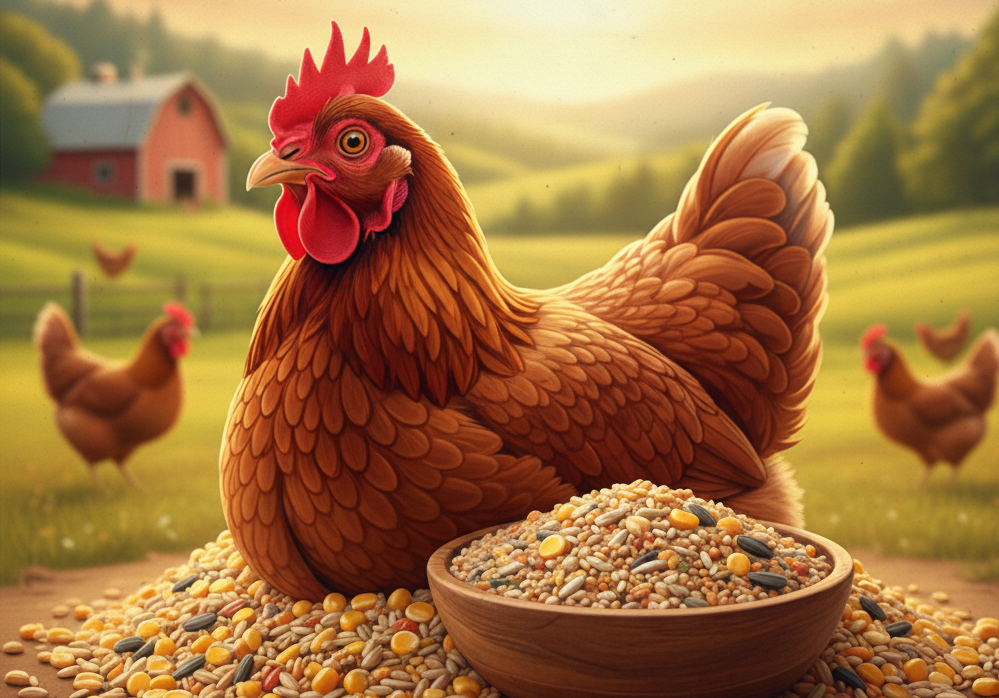
The Ultimate Guide to Growing Your Own Chicken Feed
Learn how to grow and make your own chicken feed at home.
Save money, improve poultry health, and raise chickens naturally with this easy eBook.
The Ultimate Guide to Growing Your Own Chicken Feed
Who This Guide Is For
People who want affordable, repeatable systems
Those looking for low-maintenance crops that are easy to manage
Readers who prefer clear, step-by-step instructions (no theory, no fluff)
Chicken keepers with 10–100 hens who need scalable plans
Anyone using a stationary or mobile coop
People who need realistic, field-tested methods
Those balancing chicken care with a full work schedule or low-energy/chronic illness days
Readers who want practical results, not picture-perfect homestead fantasies
Your Simple 3-Step Path to Homegrown Chicken Feed
This guide is full of systems, crops, layouts, and plans — but you do NOT need all of it to see results. What You Need to Know Up Front
You can replace 25–75% of your feed on just ¼–1 acre.
You only need a few crops and one protein system to begin. This is a pickand-choose guide — not a checklist where everything must be done.
How This Guide Saves You Money
● Replace 25% of feed → saves ~$120–$180 per year for 10 hens
● Replace 50% of feed → saves ~$240–$360 per year
● Replace 75% of feed → saves ~$360–$540 per year
● Growing protein (BSFL/duckweed/peas) → offsets $15–$30/month
● Winter storage avoids $20–$60/month in winter feed spikes
Why You Can Trust This Guide
✅ Instant Download – Get your eBook immediately after purchase.
✅ Satisfaction Guarantee – 100% practical, field-tested methods.
✅ Tested & Proven – Strategies that really work for backyard chickens.
Conclusion
Regenerative chicken farming offers a sustainable alternative to conventional poultry farming. By focusing on soil health, nutrient enrichment, and biodiversity, this approach not only benefits the environment but also enhances the quality of poultry products. Embracing these practices can lead to a more resilient and productive farming system, ultimately contributing to a healthier planet and more nutritious food supply.
To find Regenerative Chicken, visit our Regenerative Farmers map or buy from PastureBird online and ebook .